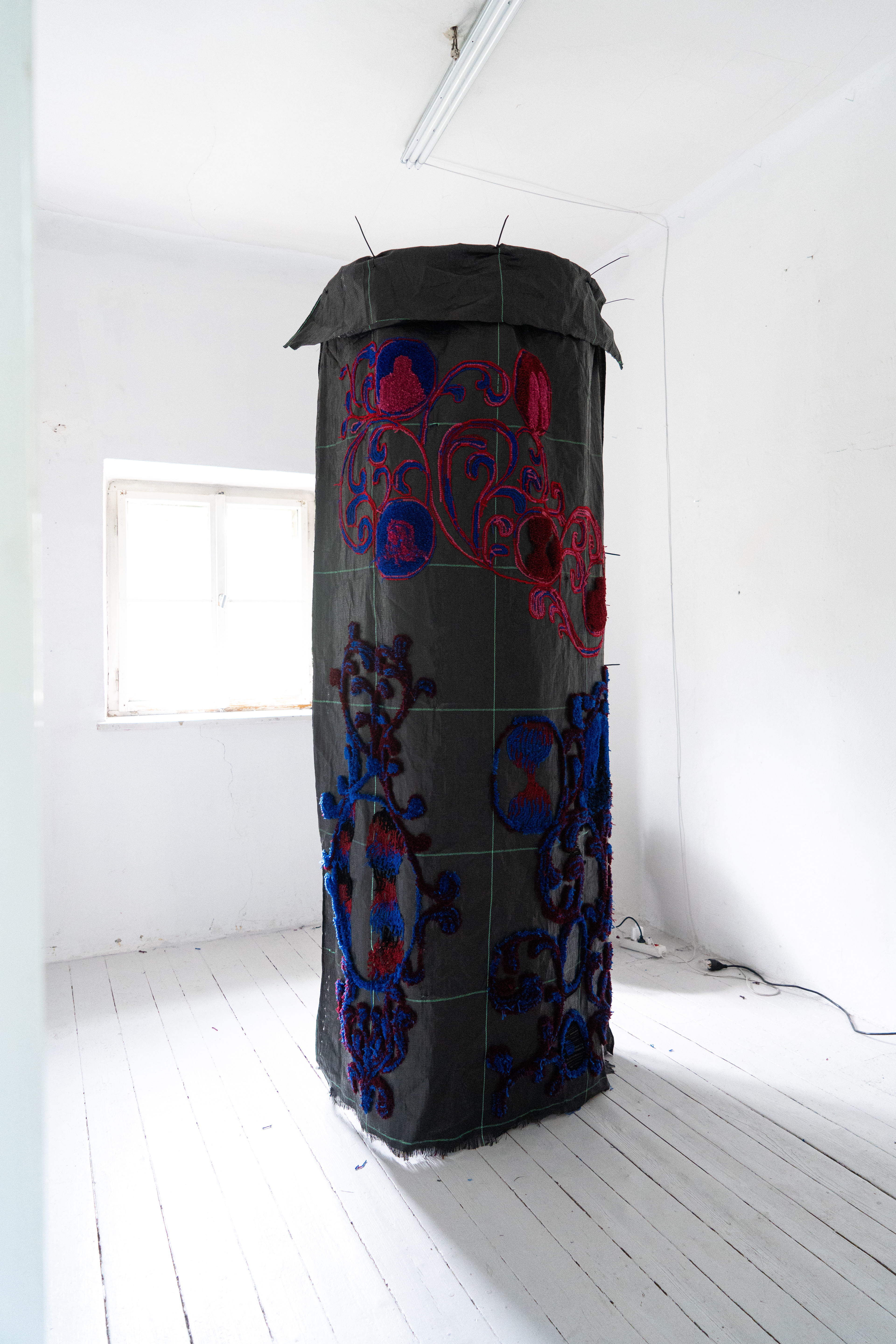
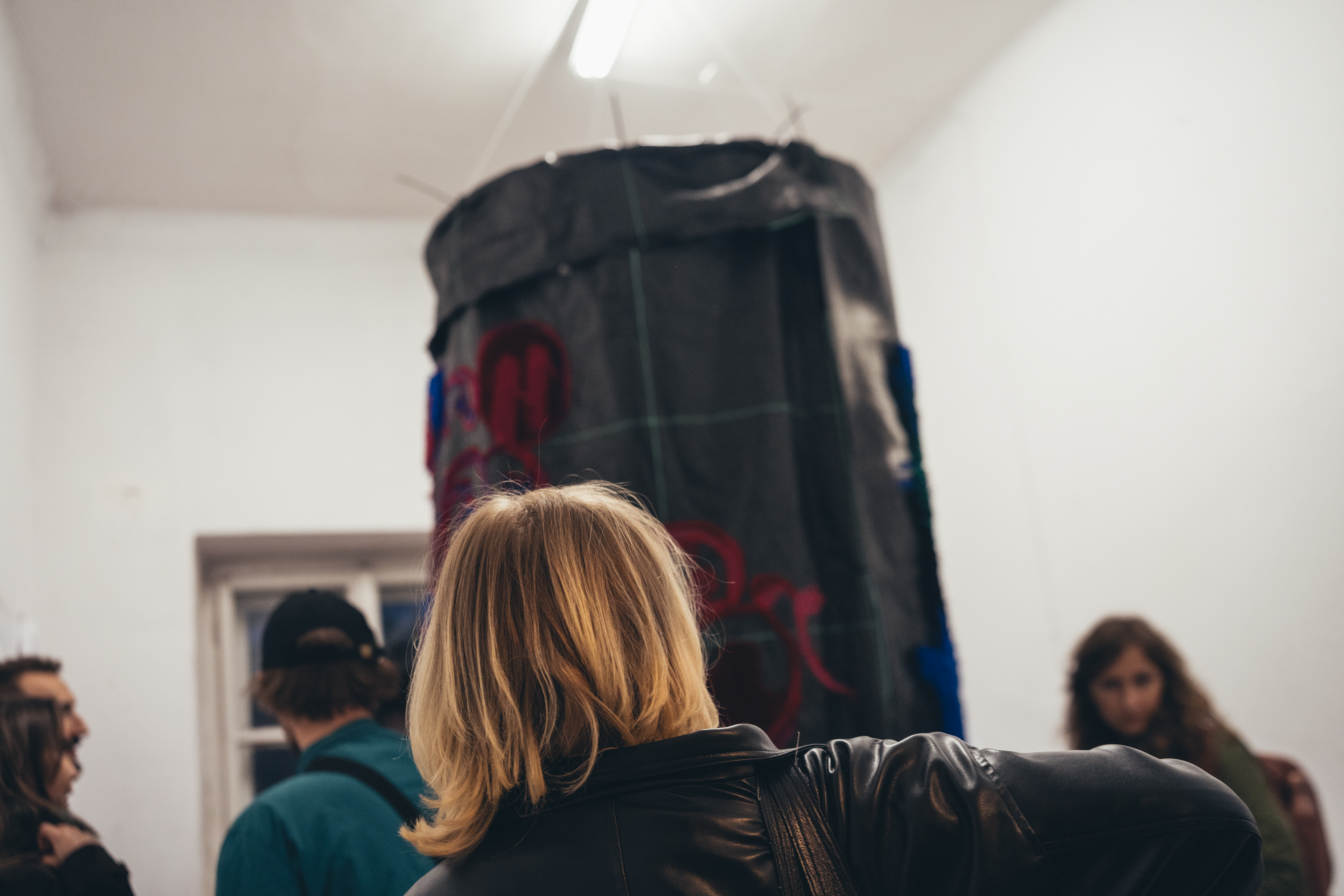
Urban Skin, 2026
spatial object, polypropylene agrotextile, yarn, tufting, sewing, 240 x 70 cm
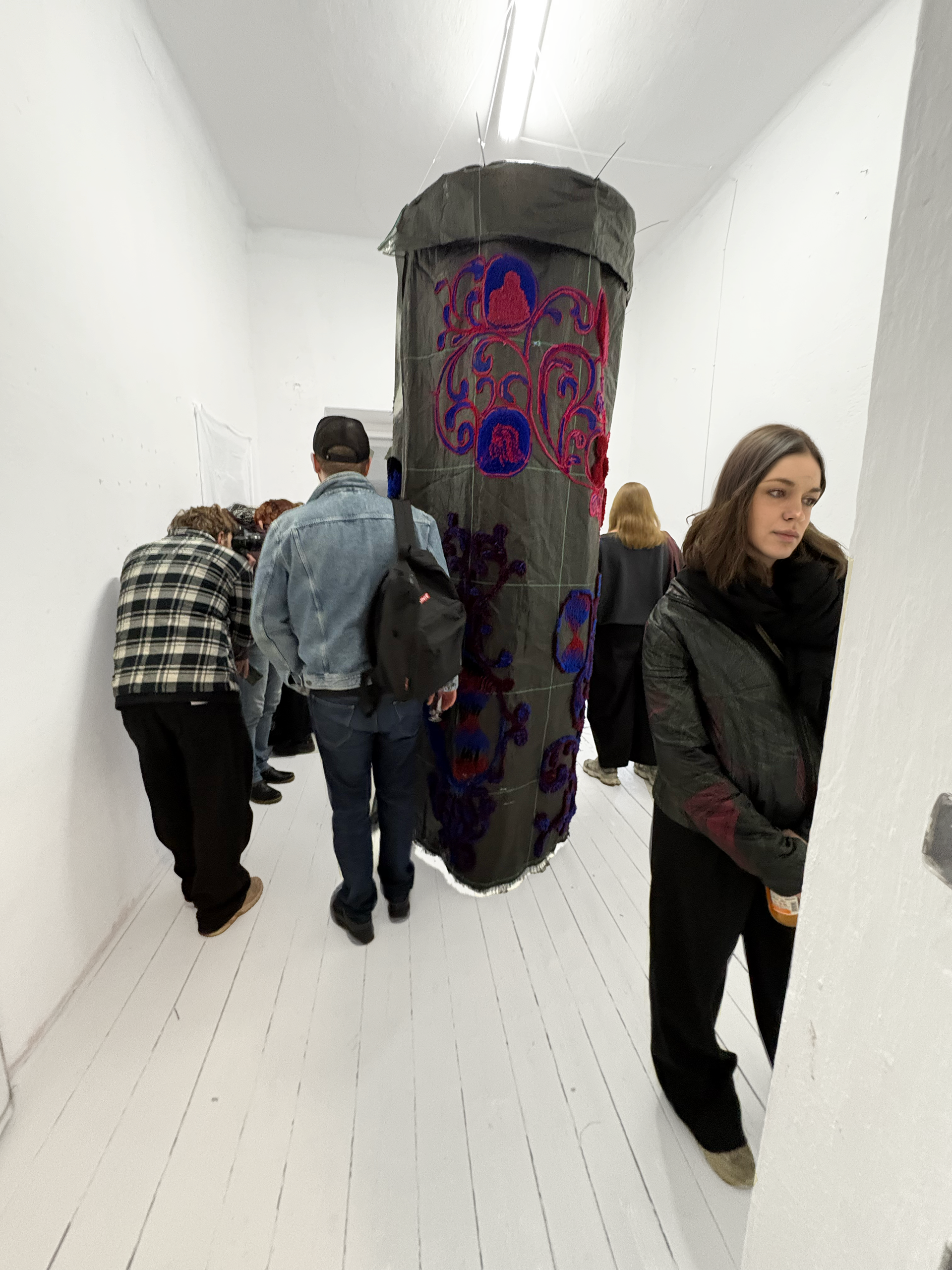
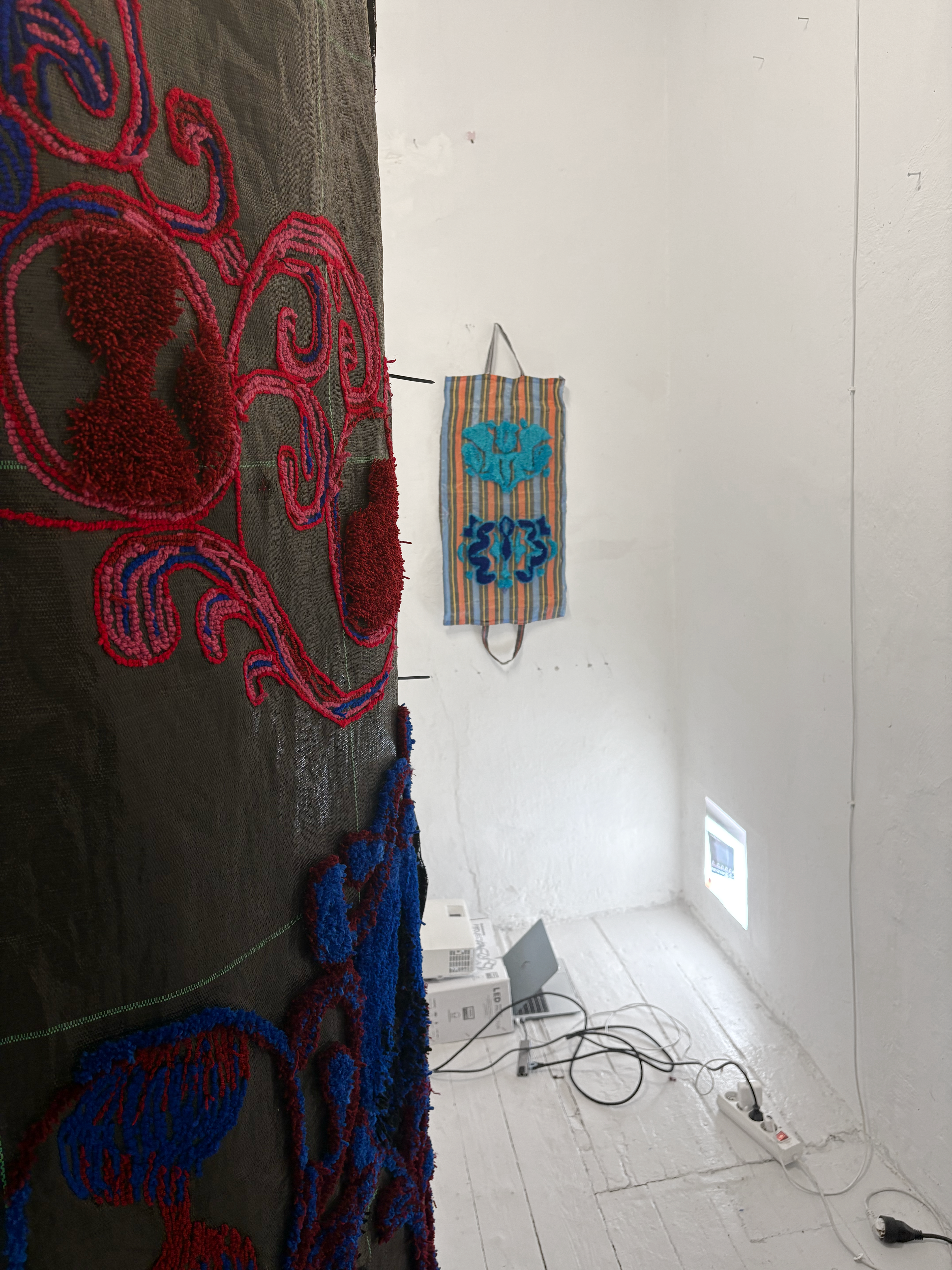
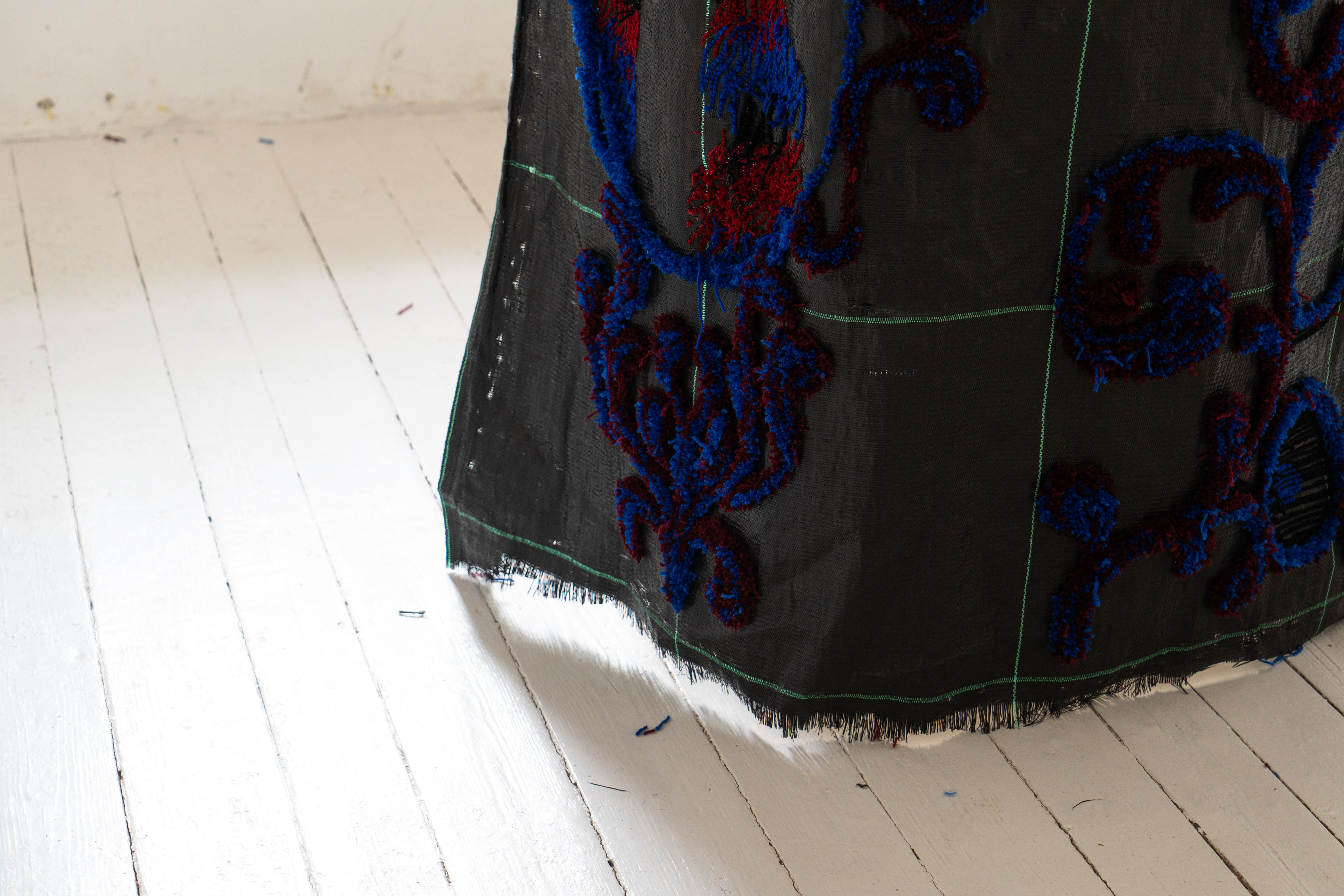
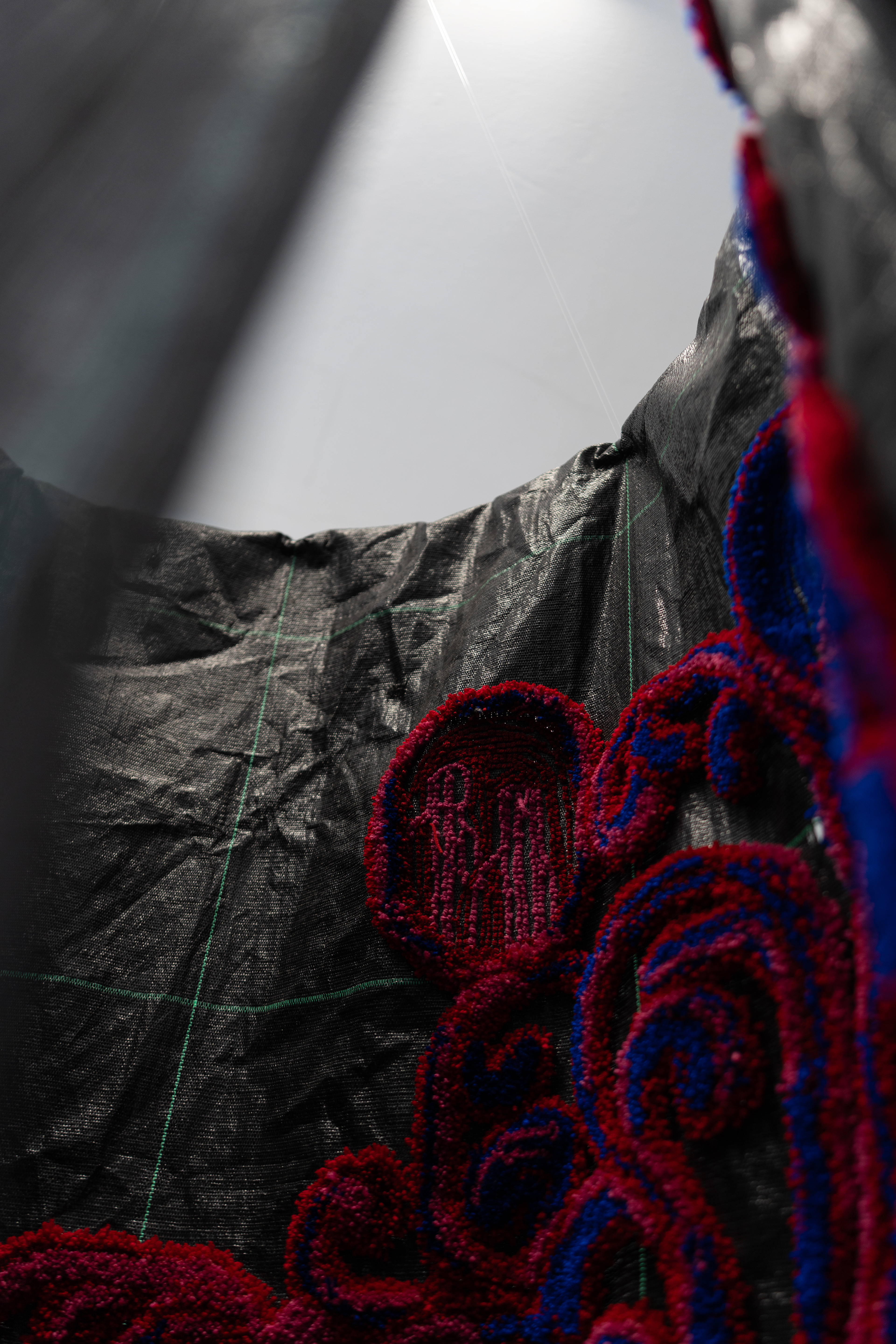
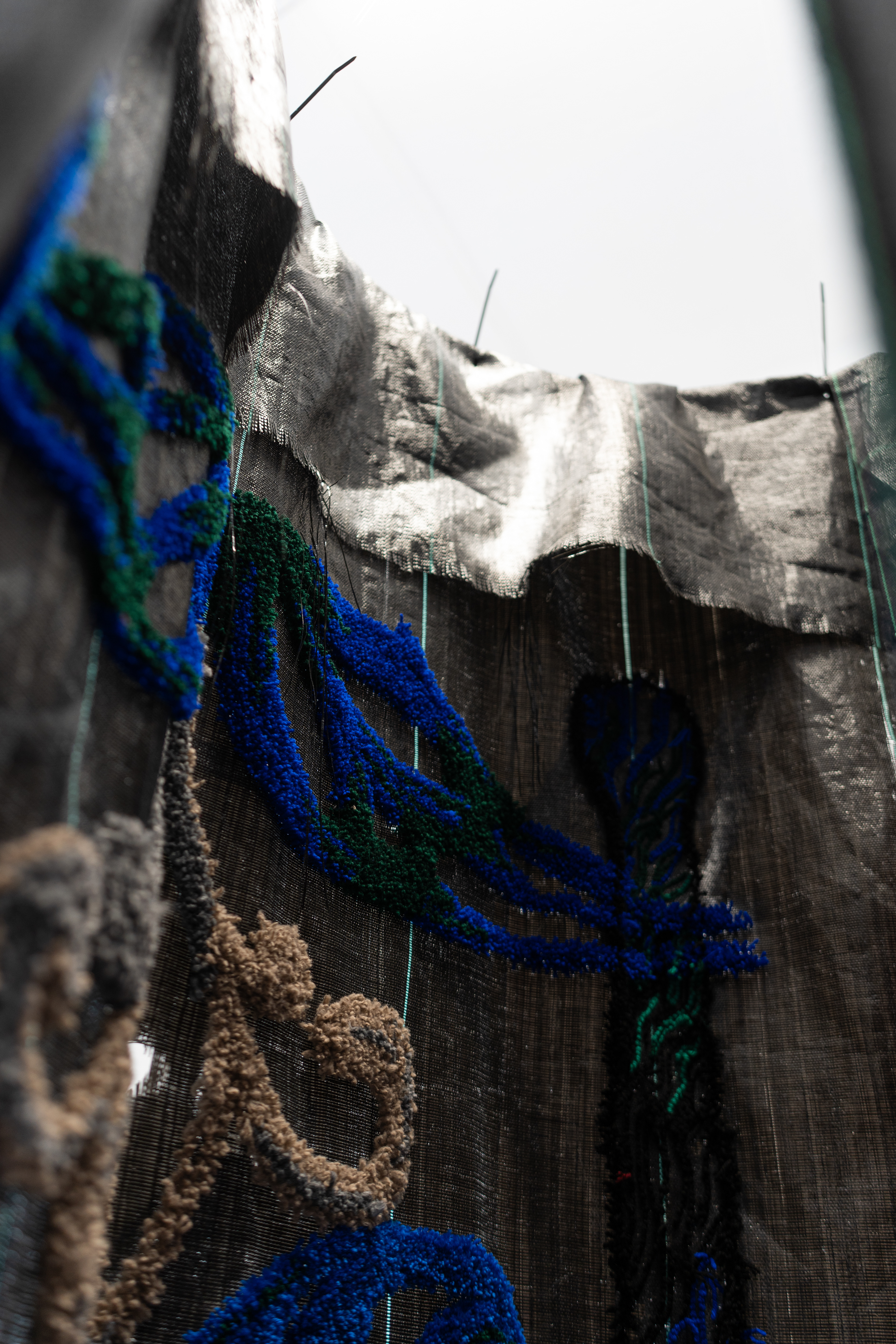
The work develops around a material that remains almost invisible in everyday life: polypropylene agrotextile. It is a common, temporary material, usually present at the margins of attention — stretched over construction-site fences, along property boundaries, in gardens, and in places undergoing renovation. I treat it as a kind of urban skin: a protective layer that conceals processes of decay, repair, and transformation. In the work, fabric reclaimed from the urban environment is transformed into a spatial structure — a circular tent. A material usually used for shielding, masking, and removing fragments of space from view is brought into the centre of attention. Waste becomes an interior, and what was meant to cover processes of change turns into a space of entry, proximity, and attentive looking.
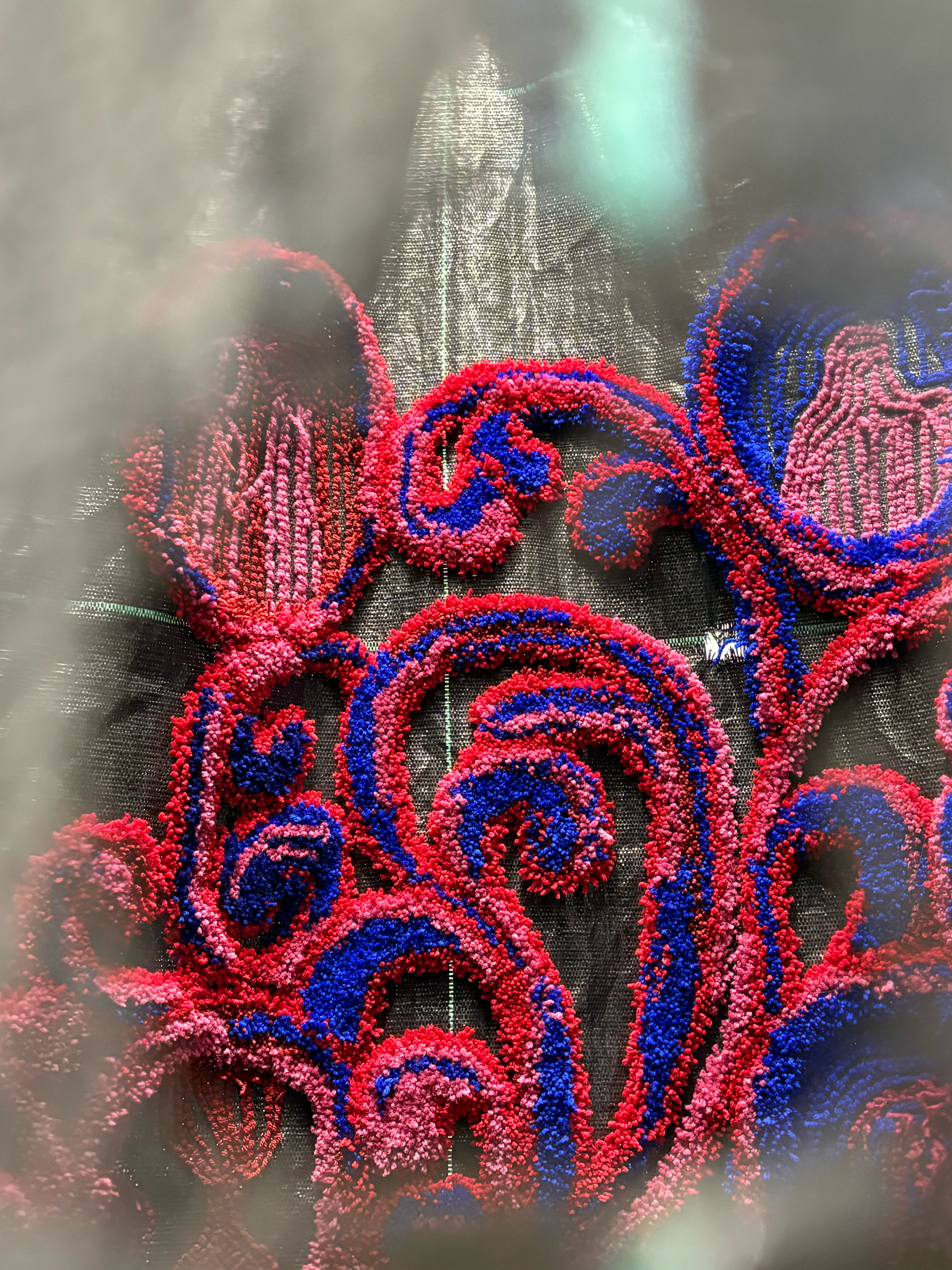
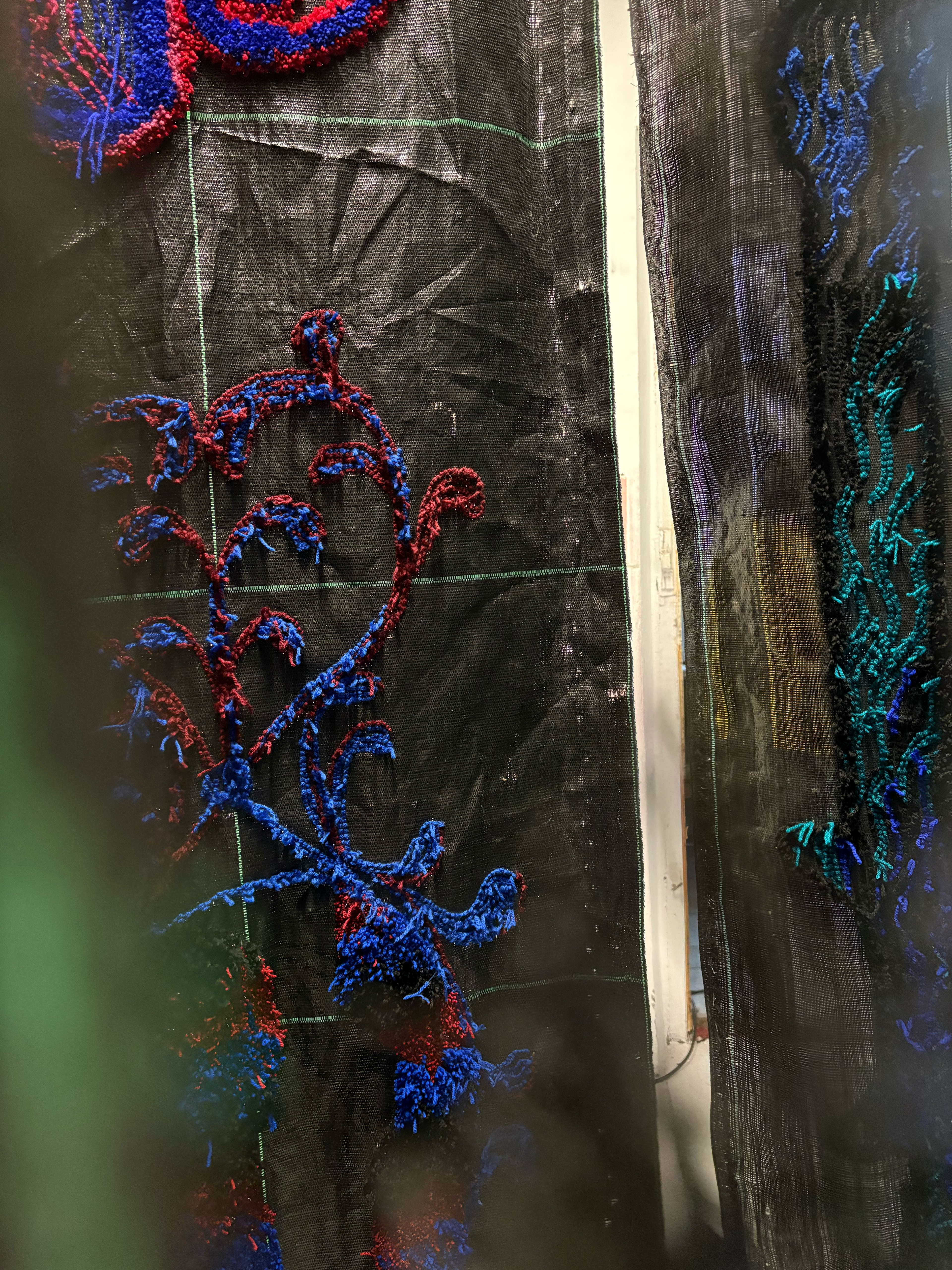
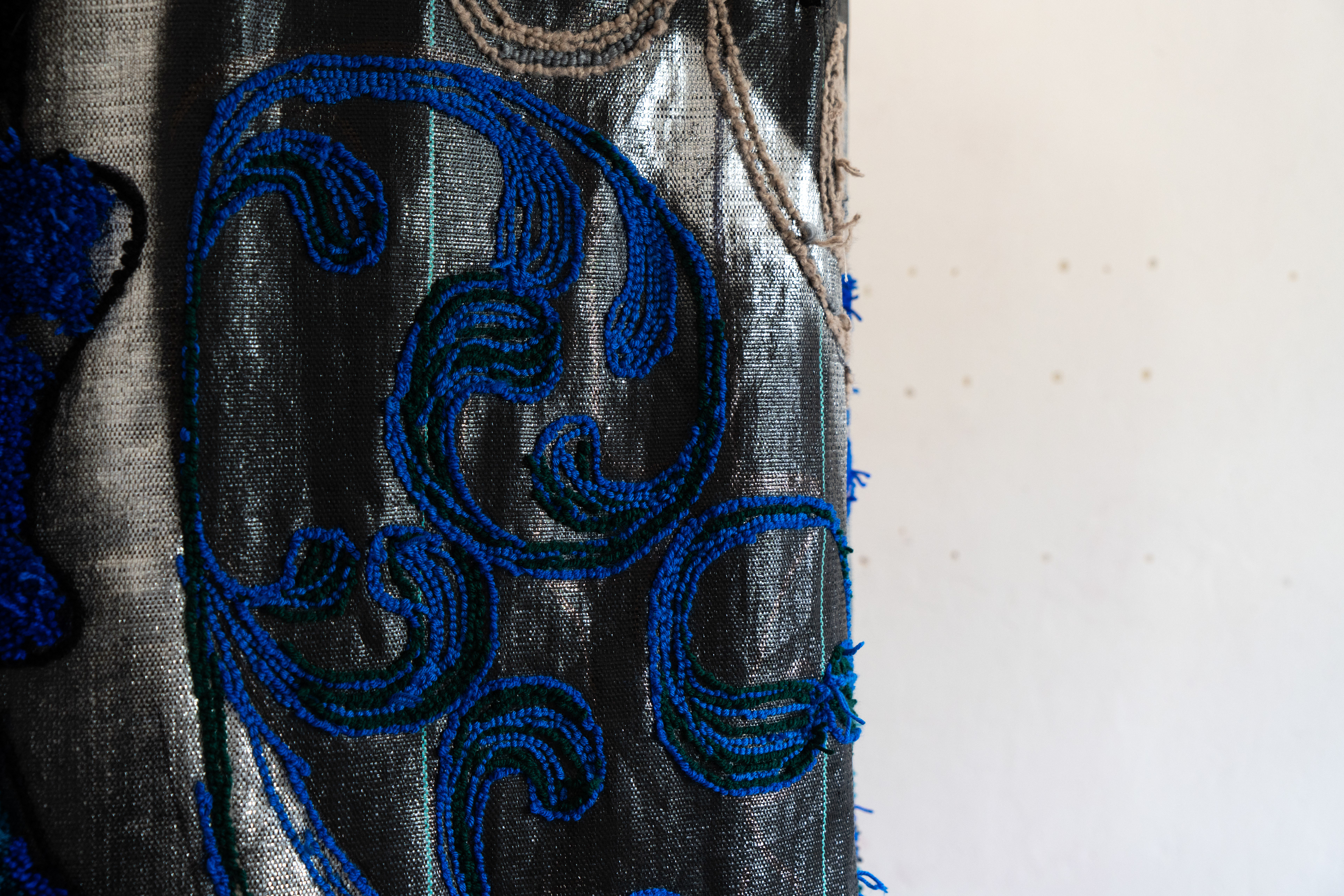
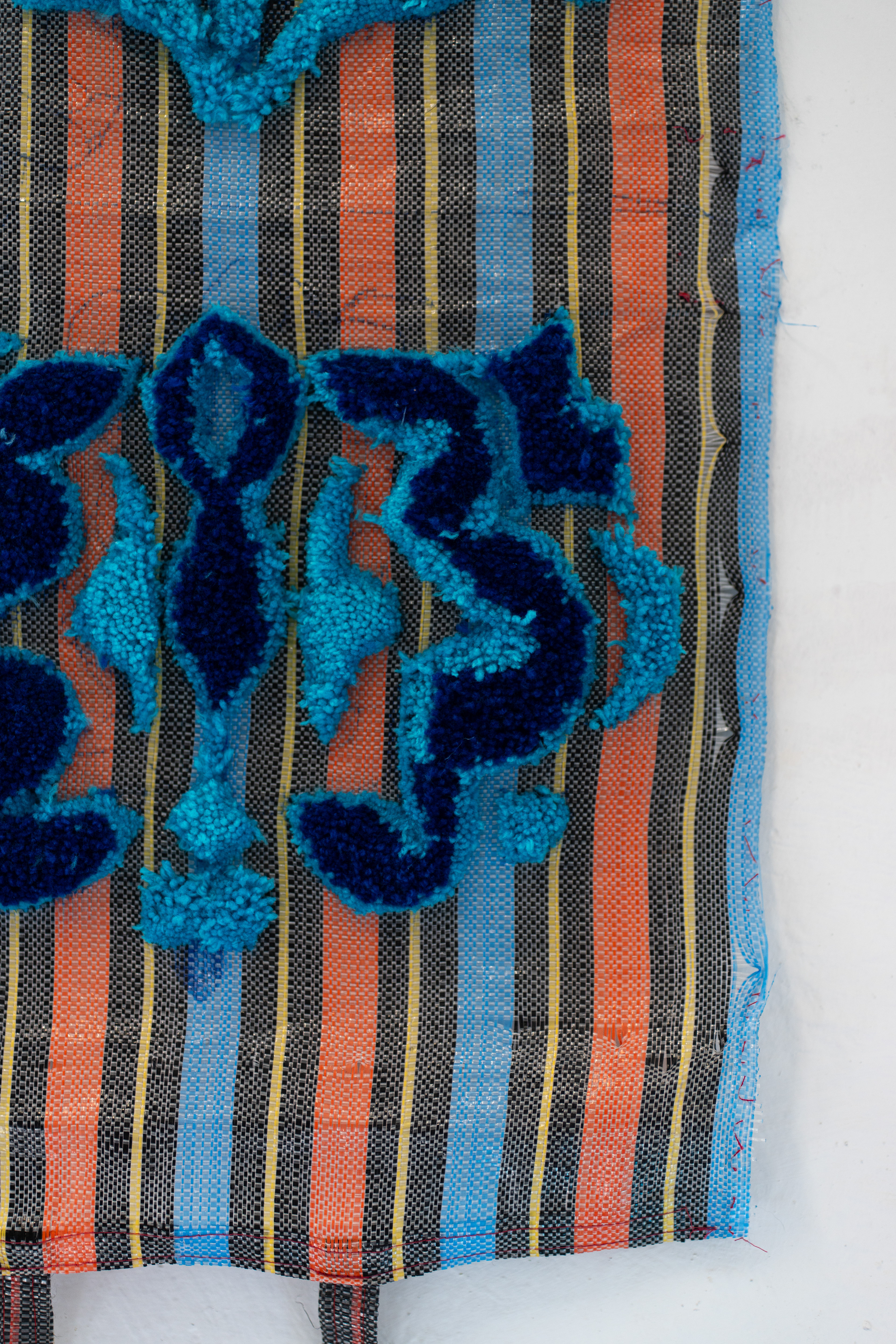
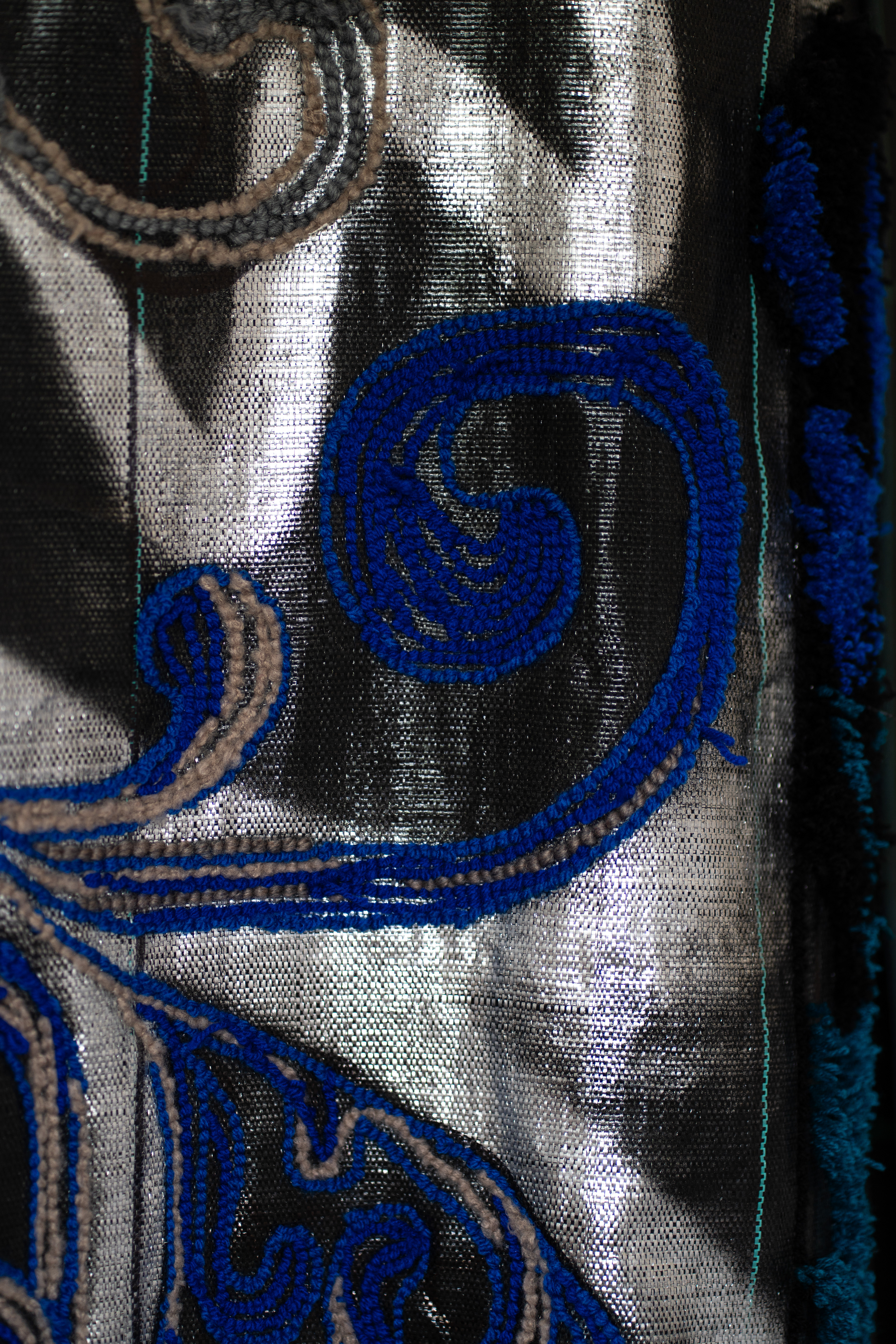
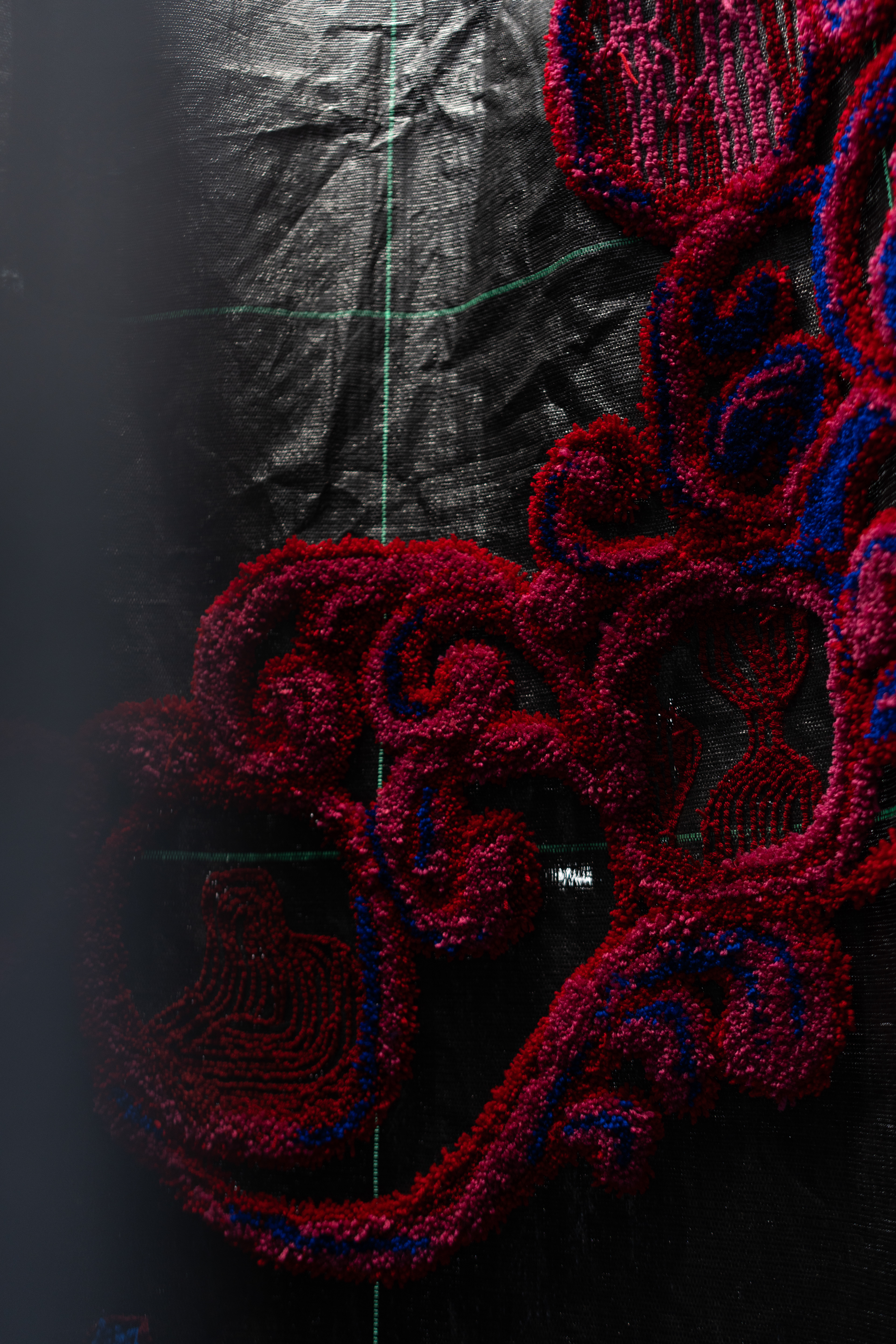
Plant-like ornaments made using the tufting technique appear on the surface of the agrotextile. Their rhythm evokes the memory of church polychromes — not as a direct quotation, but as the logic of an ornamental interior, in which decoration organizes the experience of space. Organic forms spread across mass-produced synthetic fabric, creating a tension between industrial matter and the order of memory, nature, and symbols. In the background of the work, there is a sensitivity to borderland landscapes and to the experience of areas connected with Lemkivshchyna. I am interested in space understood as a record of shifts, cracks, and layers — both material and mnemonic. The form of the tent creates a situation of crossing a threshold: curiosity leads beneath the surface, into an interior that remains, at the same time, a shelter, a hiding place, and a temporary structure.